Peter Morgan Consulting


Home
   - Q and A
Porsche Inspections
Porsche Valuations
Porsche Sourcing
Project Management
Porsches wanted!
911 Garage
About Us
Join our Team
Contact Us

Q and A to Peter Morgan

A round-up of general questions answered by Peter Morgan recently

The following subject questions are asked and answered below:

994S2

Q: Have you any idea whether 944 (excellent condition cars), particularly S2 Cabriolets will hold some value in next say 2-3 years please?

A: The 944 market is very interesting at present as the very good condition cars are beating the market. We have seen the very best S2 and Turbos selling for typically £10K when the 'normal' price is closer to £5K. There is every indication that the very best cars are resilient to the effects of the recession and over time won't depreciate with the same rate as just 'good' condition cars. The market for well maintained Porsches has seen something of a mini boom in the past few months, but nobody is betting that's going to last into the winter. My personal feeling is that we are in the 'eye of the storm' and that we have a second dip to experience before things stabilise. In that environment, with low interest rates, there is a very good case for enjoying your money with it placed in a sensibly purchased classic car. A top condition S2 would fall into that category. The coupes are in stronger demand than the Cabriolets and I think the latter require significant care in purchase. They do not hold their value as well as the coupe, possibly because the Boxster is such an attractive alternative. That said, every car should be assessed on its own merits and good cars will always outperform the norm. I always work on the basis that if a car appeals to me, then it will appeal to somebody else later. Top service history (with regular oil changes) is critical for the aluminium block engine's reliability. Things like owner numbers are not so important as the proven condition.

968

Q: Does the 968 have the same timing belt and cambelt arrangement as the 928.Is the belt change timing critical. If so what criteria apply re frequency/Mileage. Or are the camshafts chain driven. And the timing belt?? I know all this a big job with the 928. Is the 968 similar in that respect.

A: The 968 has a toothed rubber cam belt that should be changed approx every 36-48K miles/4yrs (depending on who you talk to!). It is derived from the 944S2 arrangement with an automatic tensioner, which itself was derived from the 928S4 arrangement. I can't remember which camshaft is driven by the belt (probably the exhaust), but a small duplex chain in the centre of the cam then drives the other camshaft. This is tensioned automatically and the Variocam arrangement also works on this chain (to adjust the inlet cam timing). The sprockets on the cams can wear and this is an area to look out for on an older 968. The whole arrangement is more sophisticated than the 928 because of the variable valve timing.

993

Q: I am wondering if you can advise me on which are the right tyres for the rear of my car, my car is 1996 993 Carrera (narrow body) fitted with 18-inch turbo (993) alloys at present the tyres are 265/35ZR18 however i have been told i have the wrong tyres and that i should have 285/30ZR18. Which is correct?

A: I think the standard tyre sizes for a Varioram 993 with the option 18-inch wheels are 265/35ZR18, but the Carrera S, 4S and Turbo has 285/30s on 10J rims. That suggests that you could run 285s on the rears but on the narrow body clearance could be an issue at full bump. I don't think 993s ran 9J x 18 rims, so if yours are the standard offset (40mm I think) 10J then its body clearance that is the deciding factor. I think the Turbo and RS run 65mm offset to keep the big tyre inside the arch. I have seen 285s on narrow body Carreras, but I don't know if there are any side effects.

LHD cars

Q: I have read your 993 buyers guide as I will perhaps next year buy a 993 Turbo. I will be looking for a good example in Sweden, Germany or possibly an LHD car in the UK.
Obviously there are some pitfalls to avoid and I am sure I will need some help if we find a couple of good examples.How can you eventually help us? Are other countries worth considering?

A: My experience over the past year (2009) is that most of the good left hand drive cars have already left Britain for Europe, when the UK pound fell against the Euro initially. You might like to keep a watch on the Italian market, as this always used to be a good source for UK buyers looking for a well-priced LHD car. I'm not sure if that situation has changed in the past year.

Rear Main Seal oil leaks on 996/Boxster

Q: I have a question relating to a 996. I am now selling the car and a buyer has noticed a minor seepage from the RMS.
There is evidence of an oily area in the appropriate place on the underside of the engine, but no drippage. The clutch was replaced in December 2006 and RMS done at that time.Is there any need to replace in these circumstances?

A: A very high % of 996s that I see have some sort of oil leakage past the rear main seal (or the intermediate shaft seal that's near it). Consequently the general advice is still that it’s not worth tearing the engine and gearbox apart unless the oil is actually leaving drips on the ground. Otherwise it can be left until the next clutch change (assuming it's a manual gearbox). It's obviously necessary to check the engine oil at the prescribed intervals, but as long as the oil level is correct, no damage can come to the engine specifically from a leaking rear main seal.

Which 996?

Q: I have started window shopping looking at cars priced between £24 - £28000, this puts me right in the middle of 996 price range. Because of my need for reliability and manageable running costs (I anticipate doing 15,000 miles per year with the car) I have been looking at 3.6 Carrera 2 and 4S variants - the 4S because I like the look more than anything else!Which of the models would you favour - I prefer a manual to tiptronic, if this helps. What annual servicing costs should I budget for.

A: The 996 4S is probably the most popular 996 model and is ideal for high mileage driving. The C2 is a little more focused, but is still an excellent cruiser and prices are very attractive with the car coming off its initial steep depreciation curve. Either model is fairly easy to sell at the right price. Both have very good reputations for reliability. It would come down to service history and condition if I were choosing, with preference going to the 4S if they were the same. The Tiptronic automatic is an excellent choice for any 996 and the unit has proven to be reliable. While those seeking a more focused drive would choose a manual, the Tip has proven to be very popular as an everyday driver. The servicing costs are not really going to be any more than another premium saloon. The 996 has annual services that would cost around £400 with a major service every alternate year (possibly £600). Otherwise it's wear and tear items (tyres, discs/pads, plus aircon condensers perhaps every 4-5 years). There will be other odd items.

What books to buy

Q: My husband has owned a 1970 911T Euro spec for many years and is starting to get excited about possibly restoring it. I want to buy some books that will give details about Euro spec cars. Can you recommend anything? We have your book Porsche 911: Purchase & Restoration already.

A: There aren't many good references on the practical side of restoration of the early Porsches. As you note, my book with Lindsay Porter (now 22 years old!) is about the only one that gets hands dirty. Without sounding as though I am trumpeting my own books, you might like to consider "Original Porsche 911", (ISBN 9781901432169), which goes into the specifications of the early models. Another good one on the early cars is by an American guy Dr. B. Johnson "The 911 & 912 Porsche, A restorers guide to authenticity" (ISBN 9780929758008) (don't know if this is still available. If you want a broad buyers guide, I'm afraid it's me again with "Porsche 911, the Classic models (1964-1989)" (ISBN9780954999094).

Buying a 996 Turbo

Q: I have a 1987 3.2 Carrera and am thinking of buying a 2001 996 turbo. I understand 996s can develop a problem with cylinder block ovalisation and cracking, did this extend to the turbo? Is it a model you would recommend avoiding? I would really prefer a 993 but they are so expensive!

A: The 996 Turbo has a completely different engine to the Carrera. It is based on the engine that won Le Mans in 1998 and uses the very well developed crankcase of the 993/964 models.Demand for the 996 Turbo is very strong at present as it is showing such good value. The good ones are very good, but care is required. As you say, the 993 Turbo is in a price bubble at present.

Buying a 997 C4S

Q: I'm in the market of buying a used 2006 06 reg 911 997 4S from a general dealer and require advice on when is the best, usual, time to have an independent inspection carried out by the likes of yourselves.
At the moment, I've expressed an interest in the car and, via email, have only checked that the VIN page details, year manufacture and options list etc meet and satisfy my requirements. I haven't seen the car (it's 230 miles away in Hampshire) or asked about its general condition other than the Dealer saying the bodywork & wheels are in excellent condition. I have yet to talk about a price with the dealer but have mentioned that, as they're not an OPC I'll be arranging for an independent inspection. When is the most appropriate time within the dealings to call in your expertise? Before I've agreed a purchase price, after, deposit subject to a satisfactory report etc? Your advice will be greatly appreciated.
My other concern is the time lapse between asking for an inspection and you scheduling it in and in the meantime the unsecured car has been sold to A.N Other. Obviously I understand if the deal is not finalised I bear your costs but I need to understand how your process works so as I don't pay an inspection fee on every car I look at but fail to secure.

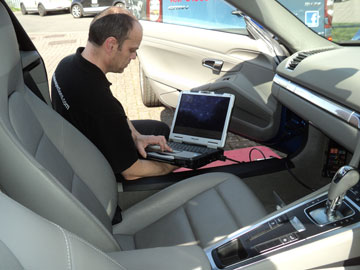
A: The way we work is that we are usually called in after a client has first seen a car or has satisfied themselves that the car is what he/she wants. We inspect cars for a good number of overseas or remote buyers, so what we do is to take a lot of photographs to shows the detail condition and any issues. The 190-point check would include putting a laptop on the ECU to check for fault codes, over-revs and record the engine operating hours (which allows us to take a view on the mileage being displayed on the main gauges). We would also give you a valuation on the car, using the same database as the dealer uses. We also carry full trade motor insurance to allow us to drive the car. We always try to complete the inspections within three working days. If the car is in Hampshire, then it would probably be me that does the inspection. I would call you after the inspection and give you the 'bullet' points of any issues about the car. The main report with all the photos would follow by PDF within 12 hours (hopefully). There is no standard way of purchasing a car, particularly when you haven't seen it. If you are satisfied that this could be the one you are looking for, then a dealer will, at some point, suggest a deposit. The market is very active at present and an unsecured car may sell. You could try and get a verbal 'first refusal' on the car from the dealer, but most will say 'first come, first served'. If the car sells after you have made the inspection booking, there would be no charge from us if we haven't left our office on the day to do the inspection.A deposit of between £250-500 would show him you are serious and it would force him to take the car off the market. I wouldn't suggest any higher sum as other factors as well as the inspection could enter the equation between deposit and completion. The deposit should be returnable if the inspection shows up any serious issues, but there should be an undertaking that any provisional price negotiated is renegotiable if there are items to be fixed at your expense. If the dealer offers to fix them to your satisfaction, then obviously the price is likely to stay the same. He is unlikely to renegotiate on basic wear and tear items I would find, like worn upholstery, accidental minor scuffs, stone chips and so on. I would expect anything that compromises the roadworthiness and if a service is overdue, to be up for negotiation. If the dealer isn't an OPC or a wel-known Porsche independent specialist, some care should be taken about who does any servicing, repairs etc that may be required.

Choosing the right Porsche

Q: I'm now at an age when I can award myself the car that has inspired me from an early age. Can you advise how I should go about selecting the right Porsche for my budget?

A: I would first suggest you get hold of a copy of one or other of the Porsche magazines and go and see some of the cars that are being offered by the independent Porsche dealers near you.I would also suggest browsing some of the internet classified ad websites . Probably the widest selection of Porsches can be found at www.pistonheads.co.uk or www.autotrader.co.uk. That should allow you to focus in on a car to match your budget and go and 'kick some tyres' to see what you get for the money. You’ll find there are some big differences! Once you’ve got past that introductory level, you’ll begin to understand the differences in terms of value for money. Look for good service history as the first condition and be wary of any aftermarket modifications. Colour and mileage also affect the value significantly.

Over-rev events on a 997S

Q: We recorded a series of over-rev events on a 997 S recently (see the data below) using Durametric software to read the ECU. The car was covered by a Porsche warranty and the potential buyer asked if the over-revs were serious.

A: I believe the notes below are drawn directly from the official Porsche guidelines to their dealers on the implications of engine over-rev events.

Engine operating hours counter at the inspection = 1687 hours

The ignition ranges I recorded are as follows:

  • IR1 8799 events with the last at 1680 hours
  • IR2 749 events with the last at 1669 hours
  • IR3 111 events with the last at 1669 hours
  • IR4 2 events with the last at 1620 hours
  • IR 5 & 6 no events

Porsche advise the following:

  • The 997S red line is at 7300 rpm.
  • IR1 records revs 7300-7500rpm (Porsche advise events in this range, engine mechanical damage is possible)
  • IR2 75-7700rpm (damage possible)
  • IR3 77-7900rpm (damage possible)
  • IR4 79-8400rpm (damage probable)
  • IR5 84-9500rpm (damage very probable)

Events in IR1 could be classed as (over) enthusiastic driving, particularly in first gear and delaying the change after the rev limiter cuts in. This can produce events in IR2 & 3 as well. It isn't recommended. If the car is covered by a Porsche warranty, any events in these ignition ranges would introduce a potential problem if there was a warranty claim. A special 'exploratory claim' would have to be made before Porsche agreed to cover any costs (but it has given them a reason not to pay the claim). The service shop would likely be asked to do a compression leak down test or a spark plug test for any events in the mid/higher IRs before any warranty claim consideration.If any issue arises within 50 hours of the over-rev event, it would be considered in this way (the last event was just 7 hours ago). In short, any events in the over-rev segments may invalidate the Porsche warranty at the manufacturer's discretion.

All the indications are that the engine has been worked very hard at or around its redline and for a regular everyday 911, this represents unsympathetic ownership.

Oil change intervals

Q: Some time ago you inspected a Porsche 996 for me (which I purchased), I'm considering selling the car, but have done very low mileages since acquiring the car, (less than 2,000 miles per annum). I would welcome your view on the "perceived wisdom" as regards servicing such a low annual mileage car.I had the vehicle fully serviced around the time I purchased it (Sept 06, 58k on the clock) and have had tyres changed, new battery, ignition coils, rear shocks etc done over the intervening years, but not another service (current mileage 63,500k).The garages say it should be done annually, but then they have a vested interest in saying so. There is a very minor amount of judder under breaking as speed, I've read that this can be addressed by having the rotors skimmed, is this advised (provided they don't fall below minimum spec), I understand that Porsche do this themselves to address the judder?

A: The engine oil on a 996 should be changed annually or at 12K miles (whichever happens first) and the oil should be changed even on a lightly used car. The reason is that in our damp climate the engine oil can only absorb so much moisture before it becomes saturated. Beyond this point there is a possibility of excess moisture in the engine accelerating corrosion or wear.That said, if the car is garaged and using a top quality oil like Mobil 1, you can probably stretch the oil changes out to 2 or even 3 years if the mileage is very low.The oil change interval was increased to 2 years/20K miles for the 2004 models and later. The key thing about buying a used car is the condition. I think with a very low mileage , and if the car hadn't had an oil change every year), it wouldn't affect my decision whether or not to buy the car. Nonetheless, some people might get nervous because the service regime wasn't followed to the letter. But if the oil quality is good and everything is working OK, there should be an issue. You can get things like a hydraulic tappet gumming up if the oil isn't fresh, but you would notice that.The brakes discs can be skimmed if they are not near their wear limit on thickness. A good independent specialist will measure the disc thickness and tell you what the best procedure is. The judder may be surface rusting on the inside faces of the discs - a symptom of low usage.

Finding the right service workshop

Q: You mentioned that you have some contacts who are authorised Porsche mechanics and to contact you when we required their details. We are due for a major service (on a Cayman) and would like to know who you recommend. Also, are they able to service a car which is currently under a Porsche used car warranty?

A: Without giving a specific recommendation (I don’t want to appear as if I’m not independent!), you could try looking here:http://www.porscheclubgbforum.com/tm.asp?m=235552&mpage=1&key=&#235552

The Porsche warranty question introduces another variable. Porsche would advise that only their authorized service centres should work on the car. This obviously introduces a higher cost for any work you want done. If it is just a service you need, it may be worth considering if you want to keep an unbroken run of ‘official’ service stamps.

Camtune (Porsche Centre Byfleet) might be a possibility for this, they are at Byfleet in Surrey, or any official Porsche dealer near to you.

Intermediate shaft failure

Q: What has your experience been with Boxster intermediate shaft failures? A friend of mine is looking to get a Boxster, but is not too confident after reading and I'm not too well versed on this particular failure.

A: I'm probably not the best person to ask as I don’t service the cars. I know that a small number of post-97 water cooled 911s and Boxsters have experienced intermediate shaft bearing failure. I would suggest that your friend shouldn’t worry about this as it is a lottery. It’s important the car has received regular skilled servicing from Porsche only people. That way the engine has the best chance of avoiding a problem (although it appears to be design related, Porsche wouldn’t admit that).

This wouldn’t stop me buying a Boxster, if the car was otherwise on the button.

For those who want to know more, I suggest looking at www.autofarm.co.uk, who offer a repair service for this issue (and other 996/Boxster engine failure issues).

C16 or C98?

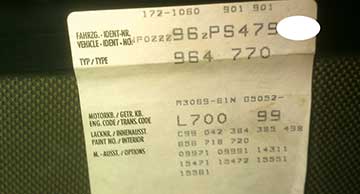
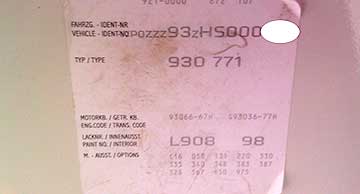
Q: I am looking at a 997 RHD that has been imported from Cyprus. The vehicle has a replacement service book. Therefore this is no VIL label, but I assume the country code is C98 rather than C16. Should I be unduly concerned about this?

A: I would suggest this is probably OK. Several leading independent dealers used to bring in C98 cars from Sweden or Cyprus to get round the long waiting lists for 911s that existed a few years ago. Porsche GB won’t have the car on their books, but all the initial manufacturer warranties will have expired except the 10 year bodyshell warranty. Unless the car has been driven on a beach or similar, that shouldn’t be a problem.

The official dealers are nonetheless very willing to look after these cars and there’s no fundamental difference between a C98 and a C16 except perhaps it may be programmed to accept lower grade fuel. The option spec of these cars is often better than the UK versions but it’s important to check they have things that were standard on the UK cars (alarm/immobiliser, full leather, etc.

The difference in values between a C16 and a C98 tend to disappear after about 5 years. There’s anecdotal evidence official network didn’t sell service books without ‘replacement’ stamped all over them to increase the value/exclusivity of their own cars (which it did).

All I would say is that these cars are very easy to clock and its worth having someone with a laptop look at the ECU to compare the engine operating hours against the mileage on the dash. The laptop would also look at the history of engine over-revving (any trackdays?) and also the engine/accessory system fault codes.

Contact Us
If you would like to learn more about how we can help you,
call 01672 514038 (from outside the UK: +44 1672514038),
08:30 - 18:30 weekdays 08:30 - 12:00 Saturdays or email peter@porscheinspections.com